
There was a moment in art history when painting stopped trying to capture perfection and started trying to capture a feeling instead. It didn’t arrive loudly. It appeared slowly, in loose brushstrokes, in shifting light, in scenes that felt almost unfinished at first glance.
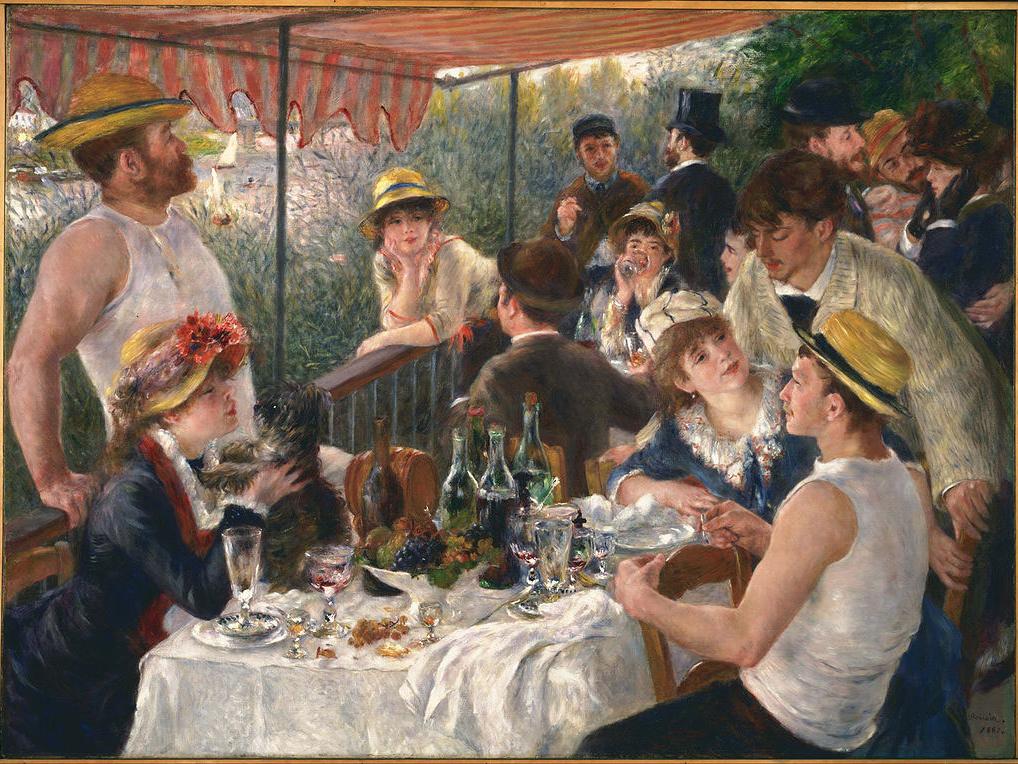
Before Impressionism, painting was expected to be controlled, detailed, and precise. Artists worked in studios, carefully constructing scenes that often felt distant from real life. Light was predictable, forms were defined, and everything had a sense of permanence. But as the world outside began to change, so did the way artists looked at it.
Paris in the late 19th century was transforming. Streets were becoming busier, cafés were filling with movement, and modern life was beginning to feel less static. A group of artists started to notice that the most interesting part of a scene was not the object itself, but the way it existed in a moment. The way light hit water for a brief second. The way a shadow shifted across a face. The way atmosphere changed everything without warning.
They began painting outdoors, directly in front of their subjects, trying to catch what was in front of them before it disappeared. This approach changed everything. Brushstrokes became looser, colors were placed side by side rather than blended, and edges started to dissolve. What mattered was not detail, but impression.
At first, the art world rejected it. The works looked unfinished, even careless compared to the academic standards of the time. But what critics saw as lack of discipline was actually a different kind of attention. Impressionist painters were not ignoring detail, they were choosing a different kind of truth, one that lived in light, movement, and perception.
Over time, that way of seeing became foundational. Artists like Monet, Renoir, and Degas shaped a new visual language where the viewer was no longer looking at a fixed reality, but a moment in motion. A painting was no longer a final image, it was an experience of time.
Even now, Impressionism feels modern. Not because of how it looks, but because of what it prioritizes. It accepts that nothing is truly still. That light changes everything. That memory is more about feeling than accuracy.
And maybe that is why it still resonates. It does not ask you to understand it immediately. It asks you to stay with it for a moment longer, until the scene starts to soften at the edges and becomes something more emotional than literal.