
Some spaces don’t try to impress you, they just feel right. You can’t always explain why. It is not the furniture, or the color palette, or any single detail. It is something in the way everything holds together, almost quietly, as if the room understands itself.
Interior design at its best is not about filling a space. It is about learning when to stop. The most calming rooms are often not the most decorated ones, but the ones that know how to leave things out. Empty space is not absence, it is structure. It gives everything else room to exist without competing for attention. Without it, even the most beautiful objects start to feel crowded, like they are speaking over each other.
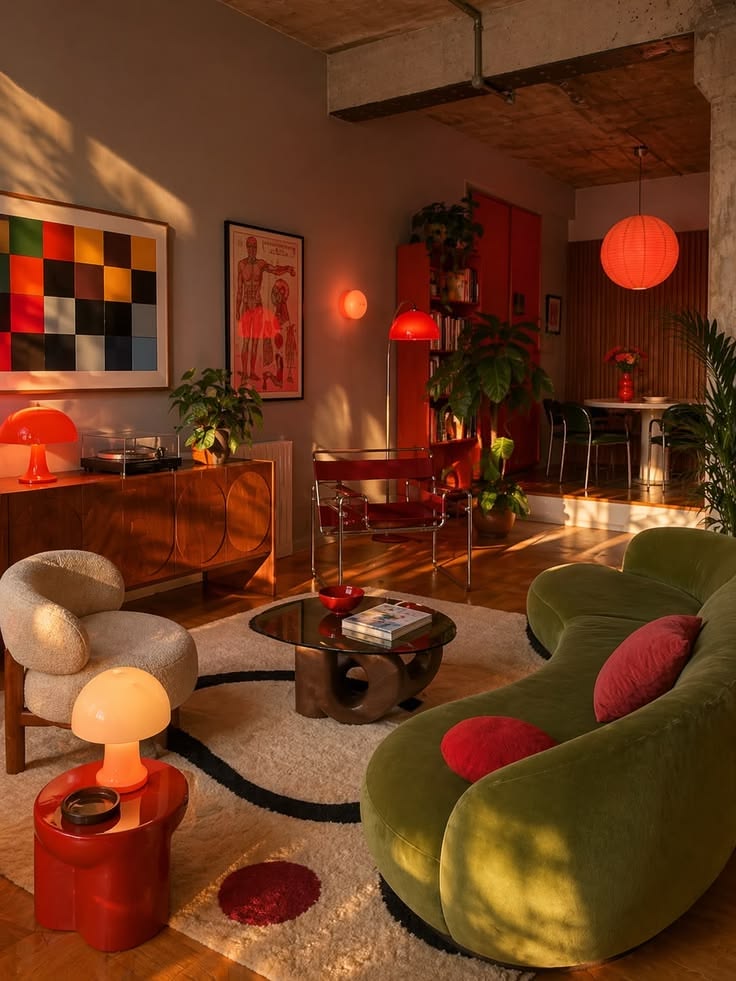
Light plays a similar role, shaping how a room is experienced before anything else is noticed. A space can shift completely depending on how daylight enters it, how it softens in the afternoon or sharpens in the morning. Artificial light carries its own mood too. Warm tones tend to slow a space down, while cooler ones make it feel more precise and intentional. The best interiors do not rely on a single source of light, they layer it gently, allowing depth to form without needing excess detail.
Then there are materials, which often say more than the objects themselves. Wood has a way of grounding a space, making it feel lived in. Stone feels still, almost permanent. Fabric softens everything around it, while metal introduces structure and clarity. When these materials are combined without thought, a room feels confused. When they are balanced carefully, they start to support each other, creating a quiet harmony that does not demand attention but holds it anyway.
Scale also has a subtle but powerful effect. A chair that is too large can make a small room feel tight, while something too small in a large space can feel like it is drifting. Nothing needs to be extravagant for a space to feel considered, it just needs to be proportioned in a way that makes sense to the body as much as the eye. That sense of fit is often what people interpret as comfort, even if they do not realise it.
Repetition brings everything together. It does not need to be obvious or strict, but some sense of rhythm always helps a space settle. It might be a recurring material, a consistent tone, or repeated shapes that quietly connect one corner of a room to another. Without repetition, spaces can feel scattered, as if each part is trying to do something different. With too much of it, things become predictable. The balance sits somewhere in between, controlled but not rigid.
The most interesting interiors are often the ones that do not reveal themselves immediately. They unfold slowly, through texture, shadow, and small decisions that only become noticeable over time. There is a kind of restraint in that, a refusal to over explain. Nothing is shouting for attention, yet everything feels deliberate.
At its core, interior design is not about decoration. It is about how a space holds you. A room can look perfect and still feel wrong, or look simple and feel completely settled. The difference is rarely visual, it is atmospheric.
And maybe that is what the quiet rules really are. Not rules in the strict sense, but patterns that keep showing up in spaces that feel right. A balance of space, light, material, scale, and rhythm, held together just enough to create something you can feel without needing to analyze it.
The best interiors do not announce themselves. They just make you stay a little longer than you planned.